
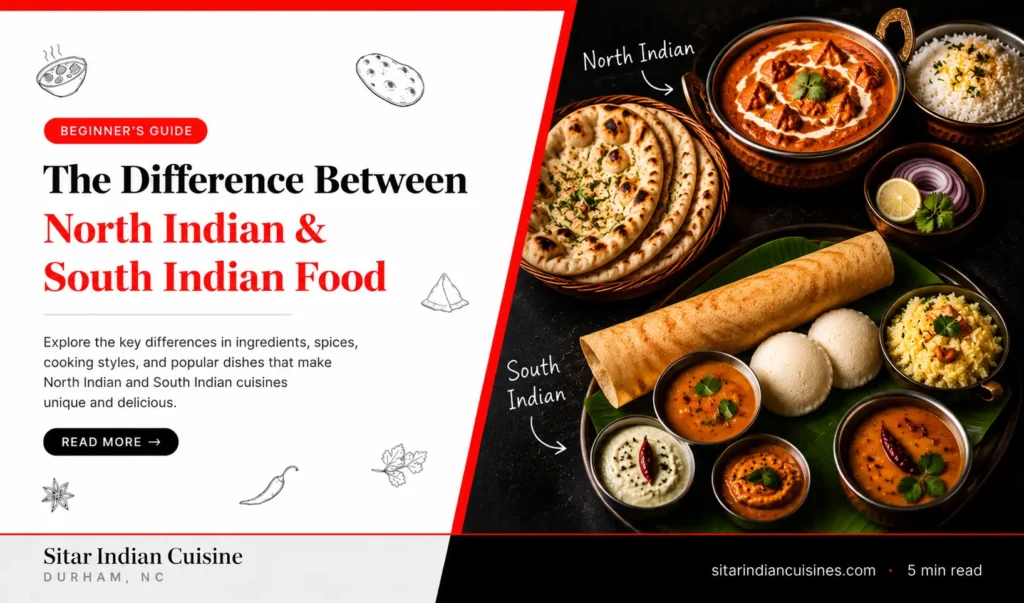
Many people assume Indian food is a single style of cuisine. But when they try a few different dishes and realize how varied it actually is.
One curry may taste rich and buttery, while another feels lighter, tangier, and packed with heat. Some meals come with naan fresh from the oven, while others revolve around rice, coconut, and spicy lentils. That’s because Indian cuisine changes dramatically from region to region.
If you’ve ever visited an Indian food restaurant in Durham and wondered why the menu feels so diverse, the answer usually comes down to differences between North Indian and South Indian food traditions. They use different ingredients, cooking techniques, and even different ideas of what makes a comforting meal.
At Sitar Indian Cuisine, guests often enjoy both styles without realizing how unique each one is. Whether you’re exploring an Indian restaurant buffet for the first time or specifically searching for a South Indian restaurant, understanding these regional differences makes the food even more enjoyable.
- Why Indian Food Changes by Region?
- What North Indian Food Is Known For
- What Makes South Indian Cuisine Different
- Difference Between North Indian and South Indian Food
- Bread in the North, Rice in the South
- Spices and Cooking Styles
- Popular North Indian Dishes
- Popular Southern Indian Dishes
- North Indian vs South Indian Food Examples
- Which Cuisine Is Spicier?
- Which One Should You Try First?
- Final Thoughts
- FAQs
Why Indian Food Changes by Region?
India is a massive country. The climate in the northern part of the country is very different from that of the tropical southern states, which affects people’s lifestyles, including their food.
In the North, wheat is common, dairy is heavily used, and meals are often built around breads and thick curries. When it comes to South rice, tapioca is a staple. Many dishes include coconut, tamarind, and curry leaves.
That’s why conversations around South Indian food vs. North Indian food are so common. They belong to the same country, but sometimes they feel like entirely different cuisines.
Even the everyday cooking oils change depending on the region, from coconut oil to mustard oil.
What North Indian Food Is Known For
North Indian cuisine is usually the first thing people picture when they think about Indian food.
Butter Chicken, naan, kebabs, creamy curries, these dishes became internationally popular for a reason. They’re comforting, rich, and full of flavor without always being extremely spicy.
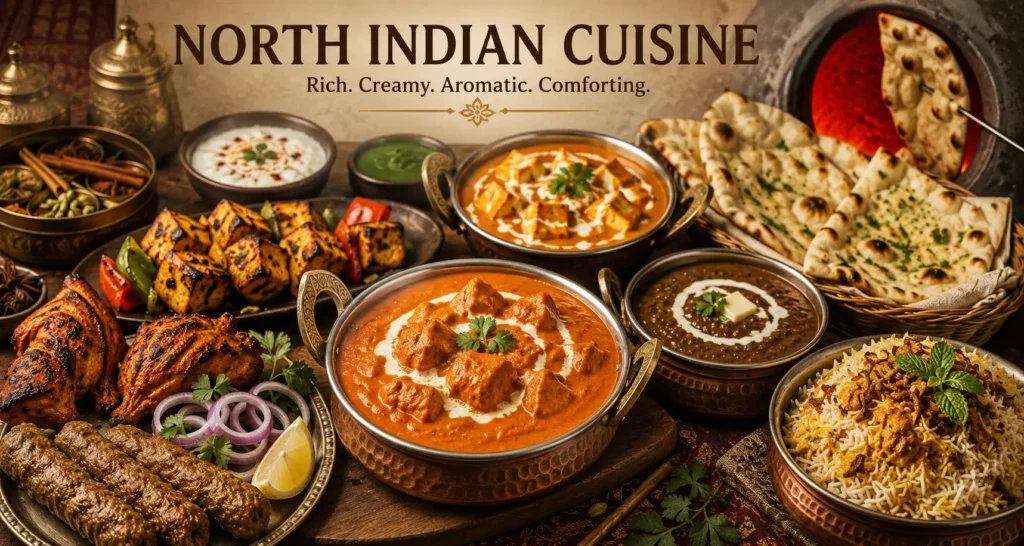
Many Northern dishes use:
- Butter
- Ghee
- Yogurt
- Cream
- Paneer
The cooking style also has influences from Mughal cuisine, which introduced slow-cooked gravies and tandoor cooking techniques centuries ago.
One thing you’ll notice quickly is that North Indian food tends to feel heavier and richer. The sauces are thicker, and breads are usually served alongside almost every meal.
The spice profile is also different. Instead of sharp heat, North Indian cuisine often focuses more on warmth and aroma. Ingredients like cardamom, cinnamon, cumin, and garam masala create depth without overpowering the dish.
What Makes South Indian Cuisine Different
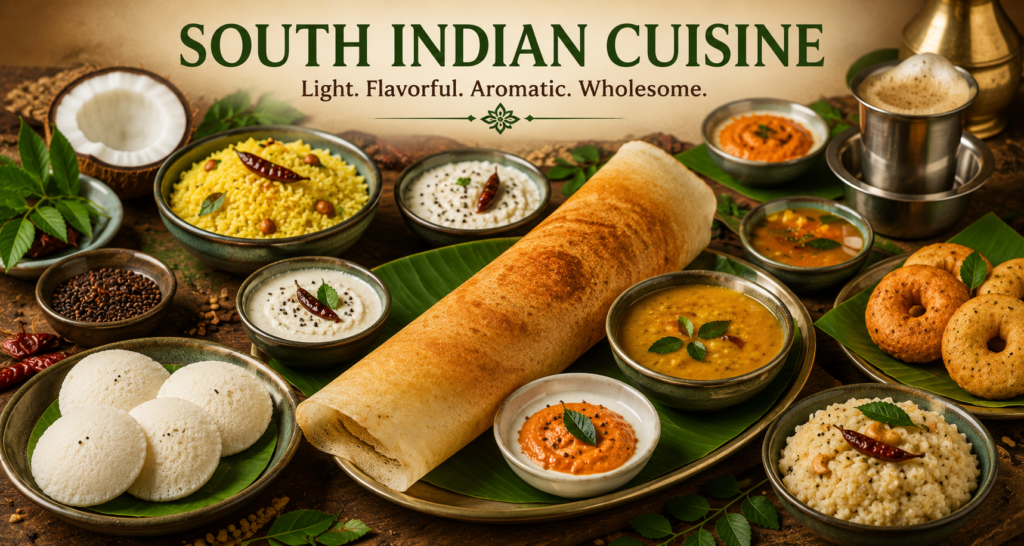
South Indian food has a completely different character.
It’s lighter in some ways, but the flavors can feel much bolder. Rice is the foundation of many meals, and ingredients like tamarind, curry leaves, mustard seeds, and coconut are used constantly.
One of the most interesting things about Southern cuisine is the use of fermentation. Dosa and idli batter, for example, are left to ferment before cooking, which gives those dishes their slightly tangy flavor.
Meals are often served with several small accompaniments instead of one large curry. A plate may include rice, sambar, pickles, and side dishes with vegetables and meat.
At a traditional South Indian restaurant, the food often feels vibrant and layered rather than rich and creamy.
Difference Between North Indian and South Indian Food
The difference between north Indian and south Indian food goes far beyond spice levels.
Main Ingredients
- North Indian cuisine depends heavily on Wheat, Dairy, Paneer, and Cream-based sauces
- Southern cuisine uses more Rice, Lentils, Coconut, and Tamarind.
This changes the texture and flavor of almost every meal.
Cooking Techniques
North Indian cooking often includes: Tandoor grilling, Slow simmering, Rich gravies
South Indian cooking focuses more on: Steaming, Fermentation, Tempering spices in oil
These methods create very different results on the plate.
Flavor Profile
North Indian dishes are usually:
- Rich
- Creamy
- Mild to medium spicy
- Smoky
South Indian dishes are often:
- Tangy
- Spicy
- Earthy
- Sharper in flavor
This contrast is one of the biggest north vs south Indian food differences people notice.
Bread in the North, Rice in the South
This is probably the easiest difference to spot. In Northern India, breads are part of daily meals. Naan, roti, and paratha are extremely common and are used to scoop up curries and sauces.
In Southern India, rice is the center of the meal. It appears in many forms, including:
Steamed rice, Dosa, Idli, Lemon rice, Tamarind rice, and so on.
Even breakfast changes depending on the region. Someone in Northern India may start the day with stuffed parathas, while someone in the South might eat dosa with chutney and sambar.
Spices and Cooking Styles
People sometimes assume all Indian food is fiery hot, but that’s not really accurate.
North Indian cuisine uses spices in a more aromatic way. The flavors are layered and warming rather than aggressively spicy.
South Indian cuisine, meanwhile, often feels brighter and bolder. Tamarind adds sourness, curry leaves add fragrance, and chilies bring more noticeable heat.
Another major difference is the use of coconut. In Southern cooking, coconut appears in curries, chutneys, and even rice dishes. In North Indian cuisine, dairy is more common than coconut.
These South Indian vs. North Indian features are what give each cuisine its own identity.
Popular North Indian Dishes
Most Indian restaurant buffet menus include several Northern favorites because they’re widely loved.
- Butter Chicken – Chicken cooked in a creamy tomato and butter sauce.
- Paneer Tikka – Spiced paneer grilled in a tandoor until slightly smoky.
- Naan – Soft flatbread baked in a clay oven.
- Rogan Josh – A flavorful lamb curry with aromatic spices.
- Chole Bhature – Spiced chickpeas served with fried bread.
These dishes are usually comforting and easy for beginners to enjoy.
Popular Southern Indian Dishes
Southern cuisine has its own iconic dishes that are completely different from Northern curries.
- Dosa – A thin crispy crepe made from fermented rice batter.
- Idli – Soft steamed rice cakes commonly eaten at breakfast
- Sambar – A lentil-based stew with vegetables and tamarind.
- Uttapam – A thicker pancake-style dish topped with vegetables.
- Coconut Chutney – A cooling side served with many South Indian meals.
The flavors are lighter overall, but still very satisfying.
North Indian vs South Indian Food Examples
Here are a few simple North Indian vs South Indian food examples:
| North Indian | South Indian |
| Butter Chicken | Dosa |
| Naan | Idli |
| Paneer Tikka | Sambar |
| Paratha | Lemon Rice |
| Rogan Josh | Uttapam |
Just looking at these dishes shows how different the two regional cuisines can be.
Which Cuisine Is Spicier?
When you are starting with the popular dishes, South Indian food might feel sharper and tangier. However, it does not mean that every South Indian dish is extremely spicy. Also, do not assume that all Northern curries are mild. It depends on the specific dish that someone eats.
Even though if you have never tried Indian food before, the most popular North Indian dishes might feel familiar. It is due to the creamy texture.
Which One Should You Try First?
Honestly, it depends on what kind of food you already enjoy.
If you like rich sauces, grilled meats, and bread-based meals, North Indian dishes are probably a good starting point.
If you prefer stronger spices, crispy textures, and rice-based dishes, South Indian cuisine may be more your style.
Most people eventually end up enjoying both.
At Sitar Indian Cuisine, guests can explore a variety of regional flavors in one place, which makes trying both North Indian and South Indian dishes much easier.
Final Thoughts
Indian cuisine is incredibly diverse, and that’s part of what makes it so interesting. North Indian and Southern dishes may come from the same country, but the flavors, ingredients, and cooking traditions are very different.
Some people love creamy curries and warm naan. Others prefer crispy dosa and spicy sambar. There’s really no wrong place to begin.
If you’re looking to experience authentic regional Indian flavors, Sitar Indian Cuisine offers a welcoming way to explore both Northern favorites and Southern specialties right here in Durham.
FAQs
- What is the biggest difference between North and South Indian food?
North Indian food is generally richer and bread-based, while South Indian food is more rice-focused and tangy.
- Is South Indian food healthier?
Many South Indian dishes are lighter and include fermented ingredients.
- Which cuisine uses more dairy?
North Indian cuisine uses more butter, cream, yogurt, and paneer.
- Are dosas South Indian?
Yes. Dosa is a traditional South Indian dish.
- Which cuisine is spicier?
South Indian food is usually spicier overall.