
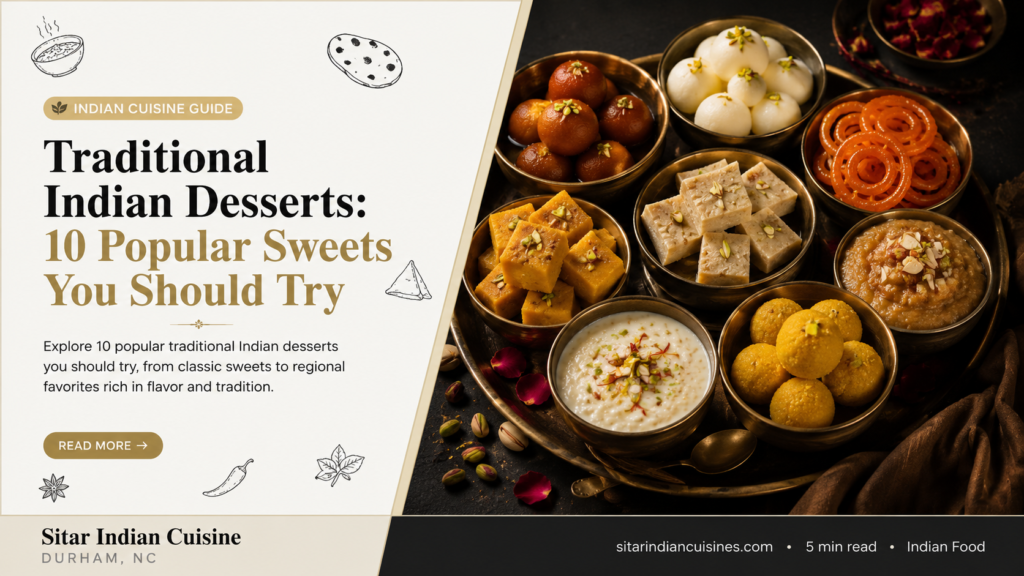
India’s most memorable meals rarely end with the main course. They end with something small, warm, and syrup-soaked. Traditional Indian desserts are the sweet full stop to a curry, a festival, or a family dinner and once you have tried them, no Western dessert quite fills the same gap. At Sitar Indian Cuisine the Indian food restaurant Durham has turned to since 1998 the sweet side of the menu matters just as much as the curries. Whether you sit down for the full Indian restaurant buffet or order à la carte, finishing sweet is part of the ritual.
Here are ten traditional Indian desserts worth seeking out, starting with the one almost everyone meets first.
10 Traditional Indian Desserts to Try Right Now
Gulab Jamun
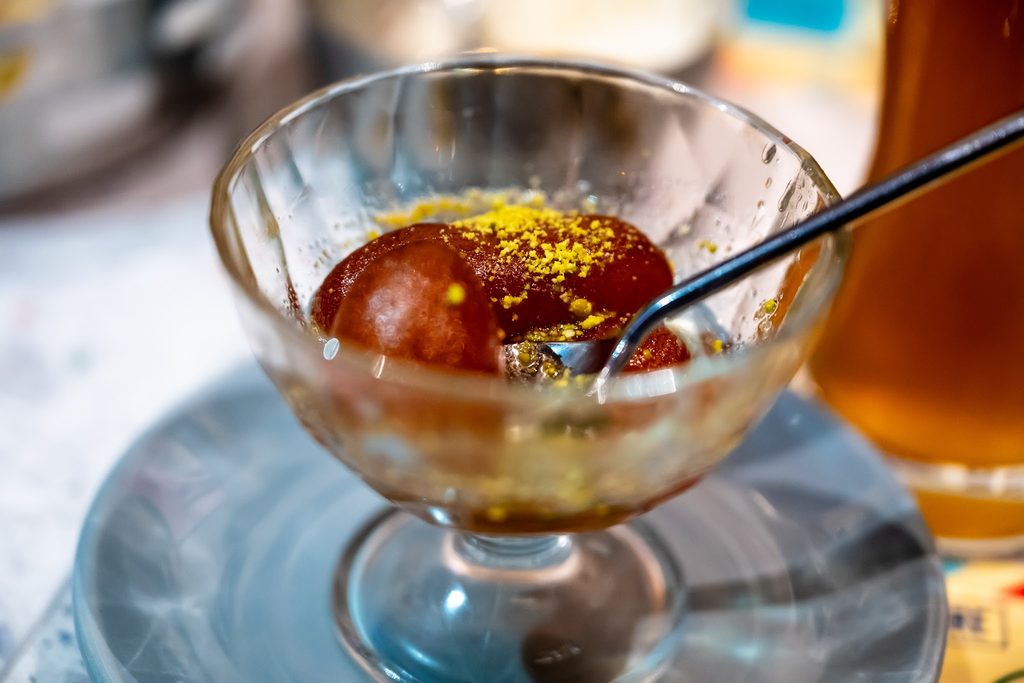
The gateway sweet. Soft, fried balls of milk solids are soaked in a rose- and cardamom-scented syrup and served warm, so they arrive glistening and give slightly at the touch of a spoon. Bite through the tender, golden shell and warm syrup floods out floral, buttery, and just sweet enough. Gulab jamun traces its roots to medieval India under the Mughal Empire, and it remains the dessert most people order to end an Indian meal.
Rasgulla
Spongy discs of fresh cottage cheese, simmered in a light sugar syrup until each one plumps up like a soft cloud. Press one gently and it springs back, releasing a little pool of fragrant syrup. This Bengali classic is airy and delicate, the polar opposite of a dense Western cake and it melts away without a hint of heaviness.
Jalebi
Crisp, bright-orange spirals of fermented batter, fried to a lace-like crunch and dipped in syrup that hardens into a sugary shellac. Break off a coil and you get a loud crackle, then a burst of warm, saffron-tinted syrup in the middle. Best eaten warm once it cools, the magic softens.
Kheer (Rice Pudding)
Rice, milk, and sugar slow-simmered with cardamom, saffron, and toasted nuts until the grains turn tender and the milk thickens to a silky, almost drinkable custard. Every spoonful is warm, fragrant, and scattered with the crunch of almonds and pistachios. It is the comforting, home-style dessert of the north the one Indian grandmothers make best.
Gajar ka Halwa
Grated carrots cooked down slowly in milk, ghee, and sugar until they surrender their earthiness and turn into a deep-orange, fudgy pudding that tastes almost caramelised. Warm, glossy, and rich with ghee, it is a winter specialty, often finished with a tumble of almonds and pistachios.
Barfi
A dense milk fudge that comes in endless flavors pistachio, cashew, coconut, and more often topped with a shimmering sliver of edible silver leaf. Cut into neat diamonds, it has a melt-in-the-mouth graininess that feels both luxurious and comforting. A single square is deceptively rich.
Ras Malai
Soft paneer discs soaked in sweetened, saffron-tinted cream and topped with pistachios, served chilled so each bite feels like a spoonful of cool, fragrant silk. The cheese drinks in the cream until it is impossibly soft. Think of it as rasgulla’s richer, creamier cousin.
Kulfi
Traditional Indian ice cream, denser and slower-melting than the Western kind because it is slow-cooked and frozen without churning. The result is a thick, almost fudgy scoop that holds its shape and lets the flavor linger. Cardamom, pistachio, saffron, and mango are the classic flavors.
Laddu
Round, buttery sweets made from chickpea flour or tiny pearls of fried batter, bound with ghee and sugar so they crumble at the first bite and release a nutty, toasted aroma. One is satisfying on its own which is exactly why they are handed out at weddings, festivals, and celebrations across India.
Payasam
The south’s answer to kheer rice or vermicelli simmered with milk, jaggery, and coconut until it turns golden and deeply caramel-sweet, with a nutty depth from the roasted coconut and cashews. It is a fitting reminder that the North Indian vs South Indian food split shows up in the dessert course too.
Why Traditional Indian Desserts Are Worth Trying
Indian sweets are not just a sugar hit. Most are built on milk, nuts, and warming spices, so they land differently than a Western slice of cake. Kheer and kulfi are slow-simmered dairy, gulab jamun and rasgulla come from milk solids, and barfi is packed with pistachio and cashew. That means many traditional Indian desserts bring real substance along with the sweet protein and calcium from the milk, good fats from the nuts rather than empty calories alone.
There is a cultural side worth tasting, too. In India, sweets mark the good moments: laddus handed out at weddings, payasam served at festivals, kheer made for birthdays. Ordering one is a small way to take part in a tradition that has been passed down for centuries.
And the flavors are genuinely different: cardamom, saffron, rose, and jaggery instead of plain sugar. If you already enjoy the spices in the main course, the dessert course is the natural place to see where they lead.
What Sitar Offers and Why It Is the Ideal Destination for Indian Sweets
Sitar Indian Cuisine has served Durham since 1998, so the kitchen knows the full arc of an Indian meal including how it should end. Alongside the Indian restaurant buffet and à la carte dishes, the dessert course is made in-house with the same care as the curries, tandoori dishes, and the most popular Indian food in Durham.
That matters because most restaurants treat dessert as an afterthought. Here, the sweet side gets the same attention: warm, syrup-soaked classics rather than a thawed slice of something. Whether you are new to the cuisine or grew up with it, finishing with a traditional Indian dessert at Sitar is the closest you can get to the real thing without leaving North Carolina.
Finish Your Meal the Indian Way
Traditional Indian desserts are worth trying for the flavor, the texture, and the tradition behind them and the right restaurant makes all three easy to experience. Next time you sit down with us, save a little room. Ask what is sweet that day, and end your meal the way India does with something warm, fragrant, and just sweet enough.
FAQs
What are the most popular traditional Indian desserts?
Some of the most popular traditional Indian desserts include gulab jamun, rasgulla, jalebi, kheer, gajar ka halwa, barfi, ras malai, kulfi, laddu, and payasam.
What is the difference between North Indian and South Indian desserts?
North Indian desserts often feature milk, paneer, and ingredients such as saffron and cardamom, while South Indian sweets commonly use coconut, jaggery, rice, and vermicelli. Payasam is a classic example of a South Indian dessert.
What Indian dessert should beginners try first?
Gulab jamun is an excellent choice for beginners. Its soft texture, warm syrup, and familiar sweet flavor make it one of the easiest traditional Indian desserts to enjoy.
Where can I try traditional Indian desserts in Durham?
Sitar Indian Cuisine in Durham offers traditional Indian dishes and desserts alongside its Indian restaurant buffet and à la carte menu. It is a good place to experience classic Indian sweets as part of a complete meal.