
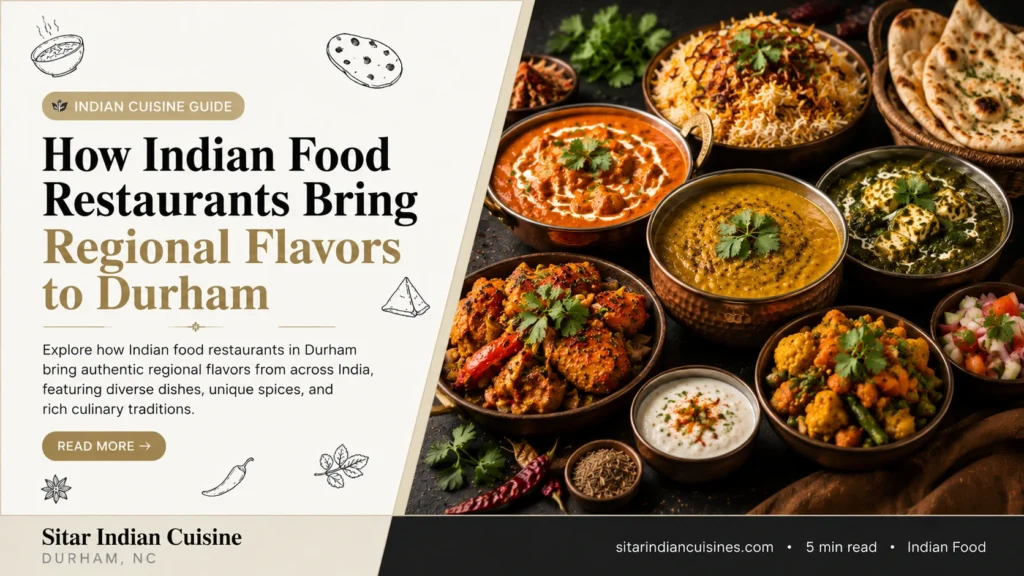
Indian food restaurants in Durham do more than serve curry and naan they bring the regional cooking of an entire country to North Carolina. Sitar Indian Cuisine has been doing exactly that since 1998, with a menu that spans the tandoor of the north and the coastal curries of the south. This guide looks at what one Indian food restaurant in Durham can offer, how the Indian restaurant buffet works as a regional tour, where Indian street food in Durham lives, and how North Indian and South Indian food sit side by side under one roof.
What an Indian Food Restaurant in Durham Really Offers
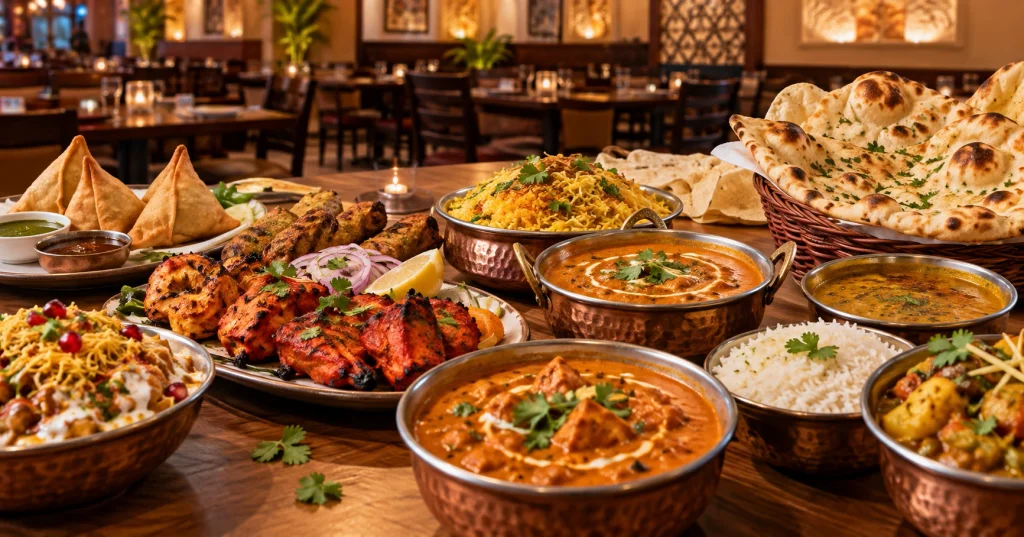
An Indian food restaurant in Durham is more than a place to eat; it is a working map of India’s cooking regions. At Sitar, the kitchen draws on both the tandoor traditions of the north and the coconut-and-spice cooking of the south, using premium natural ingredients. That is why a single restaurant can serve tandoori chicken one course and cabbage thoran the next. If you are new to the cuisine, our beginner’s guide to Indian cuisine is a good place to start, and our look at the most popular Indian food in Durham shows what local diners reach for most.
The Indian Restaurant Buffet: A Tour of India in One Sitting
The Indian restaurant buffet at Sitar is the easiest way to taste the regions side by side. Every day the buffet rotates through tandoori chicken, chicken tikka masala, chicken malai kebab, fish malabar, channa masala, saag paneer, aloo beans, daal saag and cabbage thoren a spread that jumps from the north to the Malabar coast without leaving your seat. Plant-based diners get their own evening: the vegan dinner buffet runs every other Thursday at $22.99 for adults and $12.99 for kids. Curious about how it all works? Our post on lunch and dinner Indian buffet in Durham answers the practical questions, and this roundup of Indian buffet favorites in North Carolina covers the dishes to try first.
How Indian Food Restaurants in Durham Stay True to Each Region
Indian food restaurants in Durham earn their reputation by respecting how each region actually cooks. The north leans on the tandoor a clay oven that gives butter chicken and kebabs their smoky char while the south builds meals around rice, coconut and intense spice blends. Sitar honors both, and its chefs rotate regional themes through the week. One week brings the “Spice Safari” of fragrant south Indian spices; another brings “Seafood Symphony,” inspired by India’s coastal kitchens. That rotation is why regulars never quite eat the same buffet twice.
Indian Street Food in Durham: Chaat, Kebabs and More
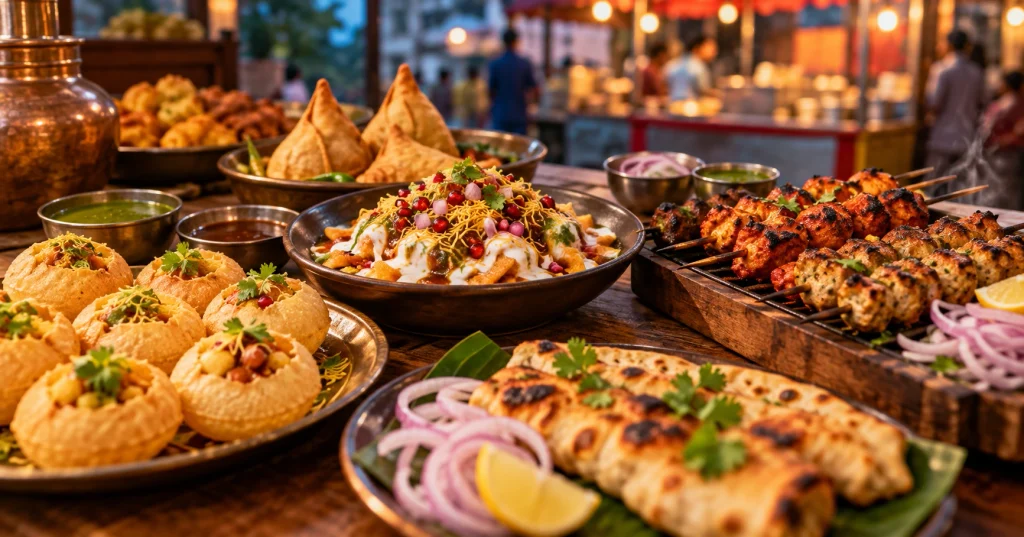
Indian street food in Durham has grown from a niche into a local favorite, and it is easy to see why. Street-style cooking is fast, loud and packed with contrast tangy chutneys, crisp fried textures, and skewers fresh off the coals. Sitar’s tandoori section carries that energy into the restaurant, with smoky, juicy kebabs served all day. Read about why Indian street food in Durham is becoming so popular, and use this guide on how to find good Indian street food in Durham to plan your first chat.
North Indian and South Indian Food Under One Roof
North Indian and South Indian food differ in more than geography. Butter chicken, for instance, was born in Delhi’s Moti Mahal in the 1950s, part of the rich, tomato-and-cream cooking of the north. Biryani from the Persian word “biryan,” meaning to fry or roast, traveled from the royal kitchens of the Mughals into everyday menus. South Indian cuisine, by contrast, spans five states and a union territory, from Andhra Pradesh to Kerala, with sub-cuisines like Chettinad, Hyderabadi, Thalassery and Udupi. Black pepper is native to the Malabar Coast, and the Portuguese brought tomatoes and chilies to India in the 1500s which is why a Kerala dish like cabbage thoran tastes so different from a Delhi butter chicken. Our complete guide to the differences between North Indian and South Indian food digs into both traditions, and this breakdown of curry versus masala explains the terms you will see on menus.
Conclusion
Indian food restaurants in Durham bring a whole country’s regional cooking to one city, and Sitar has done it since 1998. Whether you explore the Indian restaurant buffet, chase Indian street food in Durham, or work your way through North Indian and South Indian food, the flavors of India’s regions are on the table every day. Come hungry, the buffet is waiting.
FAQs
Is there an Indian restaurant buffet in Durham?
Yes. Sitar Indian Cuisine runs a daily lunch and dinner buffet at 3630 Durham Chapel Hill Blvd. The menu rotates through North and South Indian dishes tandoori chicken, chicken tikka masala, fish malabar, saag paneer and more and a separate vegan dinner buffet is served every other Thursday at $22.99 for adults and $12.99 for kids.
Where can I find Indian street food in Durham?
Sitar brings street-style cooking into the restaurant through its tandoor section, with smoky kebabs and skewers served all day. For the full picture of the city’s street-food scene, read our guide to Indian street food in Durham.
What is the difference between North Indian and South Indian food?
North Indian cooking leans on the tandoor, wheat breads and rich tomato-and-cream gravies like butter chicken. South Indian cooking builds on rice, coconut and spices like black pepper, which is native to the Malabar Coast. Sitar serves both traditions side by side, so you can compare them in one meal.