
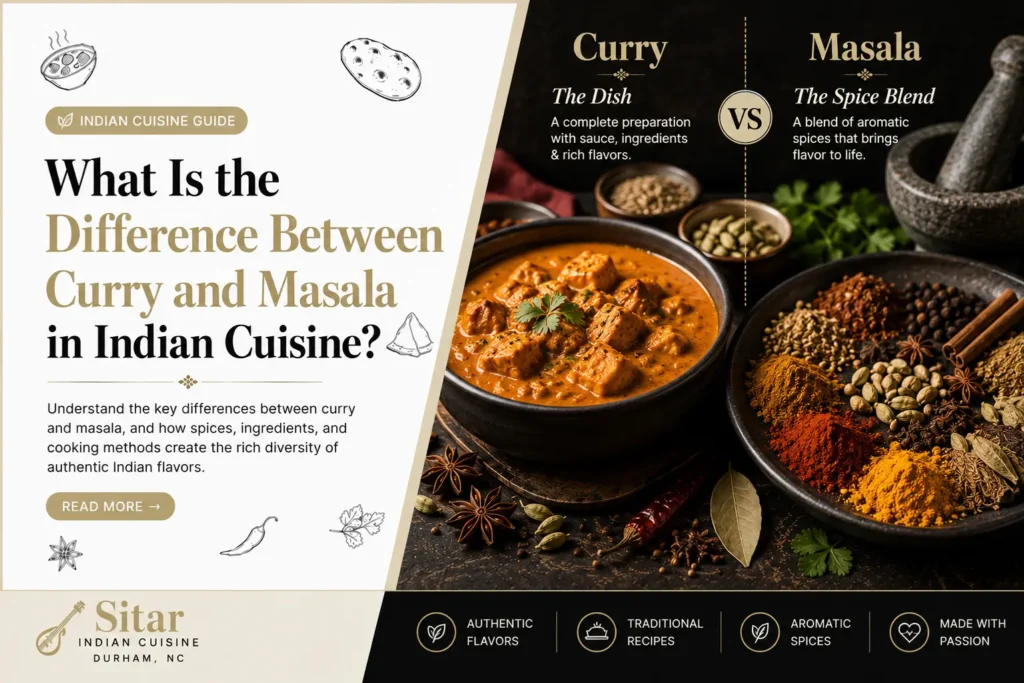
Only a handful of people know how, or if, to differentiate between ‘curry’ and ‘masala’ the terms appear in unison on menus, at cookery programmes and on recipe sites so the lack of awareness is comprehensible but the differences do exist. However, delving into the difference between curry and masala will unlock a wider understanding of Indian cooking, as although they both form an integral part of Indian cuisine, they in fact denote two separate and distinct features of the culture. For those new to Indian food Durham, it is not difficult to see how understanding the distinction would enhance the experience of ordering from an Indian menu; for rather than seeing all aromatic recipes as merely “curry,” there is the added advantage of understanding how spice mixtures have come to form regional recipes.
Sitar Indian Cuisine strives to recreate these authentic and classic dishes using precisely measured spices, and with adherence to well-honed methods of cooking. For those experiencing Indian restaurant buffet, it also demonstrates how unique blends of spices create entirely different flavors across all recipes; be it creamy tomato-based creations or delicately flavored vegetable dishes, the variety in each recipe is always influenced by choice of spice. Therefore, it matters not whether the person eating the dish has years of Indian cooking experience or has never tried a curry before, it becomes evident how two dishes that appear visually identical can taste so completely different.
What Is Curry?
Understanding the difference between curry and masala, before we tackle masala, it’s helpful to start with curry. Curry often is used in many parts of the Western world to refer to practically any savory sauce or gravy containing Indian flavor. However, that’s misleading in the traditional Indian context. There’s no single Indian dish called a curry; it is essentially an umbrella term used during the colonial British era, when it was adopted as shorthand for a category of Indian dishes.
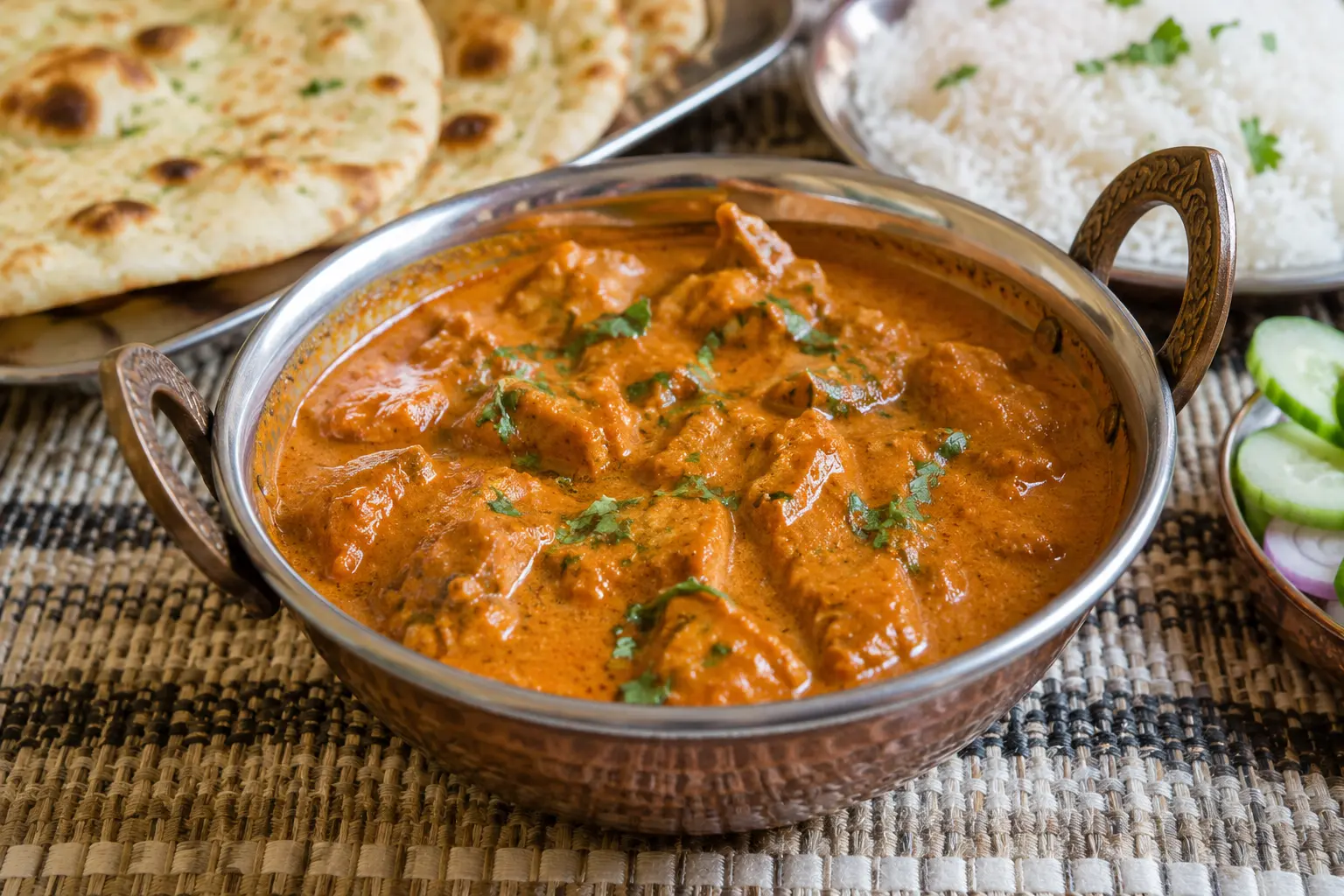
Now, curry has come to mean the cooked dish itself, whether it features vegetable, chicken, fish, lamb,paneer,or lentils in a sauce. Since there are countless regional Indian specialties, the term “curry” spans everything from a creamy butter chicken in the north of India to a pungent south Indian fish curry, each employing different spices and cooking processes to create distinct flavor profiles. This is perhaps where this debate around curry vs masala truly divides the Indian population, curry means the entire served dish, not just the spices, this is one of the greatest sticking points between these two Indian savory delights. A curry can include ingredients such as The curry sauce/gravy typically contains vegetables.
It may have spices mixed with water or broth, yogurt or coconut milk to create the sauces as well:
- Is presented to the table as a complete meal
- It often comes with a sauce or a gravy.
- In addition to the vegetables, they typically come with meat, fish, paneer or lentils.
- Eaten with rice, naan, chapati or Indian bread
- There is a whole variety of spices used to give each curry its unique taste
Curry is often served mild and creamy but it also comes in rich, tangy or spicy variants. And again, not the variety of spices are responsible for the taste of the Indian curry but also onions, tomatoes, yogurt, coconut milk, garlic, ginger and herbs. Because India is so different from north to south there is no one Indian curry but thousands of different Indian curry recipes.
For people who would like to know more about the Indian cooking they can have a look at the Beginner’s Guide to Indian Cuisine.
What Is Masala?
The word “masala” simply means a mixture of spices. A masala is not something eat to begin with, unlike a curry. It is a blend of the correct mix of spices that make up our curries, the flavor, color, and smell. That premise should always be kept in mind when considering the two.
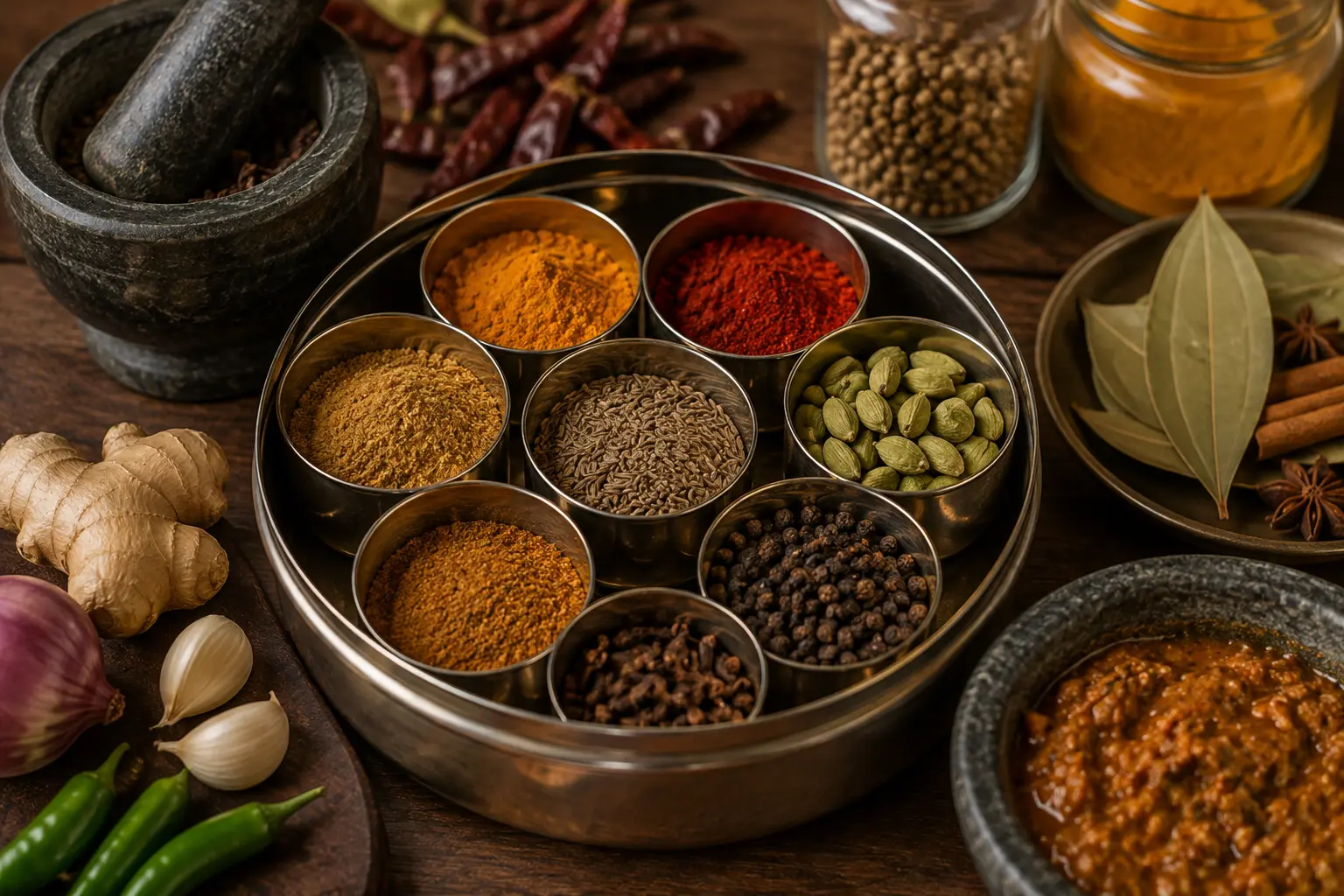
A masala may contain such components as:
Not all recipes include every spice. Each is unique,and family,or a local restaurant or region might make its own variation of that recipe. For example, garam masala is an example of one of the most common warm, spice mixes used towards the end of cooking. Others are dry powders, freshly ground pastes, and Wet masalas made from an onion, garlic and ginger paste with herbs and spices.
This is why there is some confusion around the difference of what’s a curry versus a masala. A masala adds the flavoring, while a curry is made from the flavoring in the dish. Chicken Tikka Masala, made from a seasoned masala added into the chicken along with the sauce of onion, tomatoes and cream that then turns Chicken Tikka into a savory Indian curry dish. It also is why Chana Masala uses its specific blend of aromatics as the base of an enjoyable chick pea gravy-type curry.
Masala isn’t just used with sauced dishes, as it is found in plenty of drier, spice-based dishes as well. This could be seen in spiced vegetables, tandoori meats, rice pilafs and many savory snacks.Beyond this fact, a further difference in Indian cooking is that the spice combination is different from region to region.
North Indian preparations have got a tendency to be more heated with spices which blend of cinnamon, cardamom, and ginger and spices with, like curry leaves and dried chilli which could be used more frequently in South Indian cookery. So in a way, sometimes the comparison of curry vs. Masala has to be turned on its head, the masala is used to make flavor in the final dish. There are innumerable masalas throughout Indian cooking as North Indian vs South Indian food from many regions that have been formed to compliment various palates.
Difference Between Curry and Masala: Primary differences
By comparing side by side of the two, start to understand the difference between curry and masala. Both names are confused, commonly, in many parts of the world as being the same but it’s not the case as they both reflect a different stage of cooking.
| Feature | Curry | Masala |
| What it is | A finished Indian dish, usually served with a gravy or sauce | A blend of spices used to season food |
| Form | A complete meal with vegetables, paneer, meat, seafood, or lentils | Dry spice powder, whole spices, or a fresh spice paste |
| Role in cooking | The final dish served with rice or bread | Builds the flavor, aroma, and color of the dish |
| Examples | Butter Chicken, Fish Curry, Vegetable Curry, Korma | Garam Masala, Chaat Masala, Tandoori Masala, Chana Masala spice blend |
But to put it simply, this means masala is part of many dishes whereas curry is what comes out at the table. That’s the easiest distinction, remember for masala versus curry! Yet another interesting element in the curry versus masala debate is the one masala blends many curries.
Garam masala, as has been stated, goes into curry and lentil preparations and also in dry vegetables or rice dishes. Similarly, two curries made with the very same ingredients could have extremely different flavours if made with two types of masalas.
Is Curry or Masala Healthier?
A popular question among curry enthusiasts is which is better: curry or masala? There isn’t necessarily a one to one comparison between the two, as the nutritional comparison depends less on name and more on the contents. Masala is simply a mix of spices and in many instances a crucial ingredient for creating our delicious homemade and shop brought curries, so we can conclude both are beneficial when cooked responsibly.
The overall comparison of whether curry or masala is healthier really depends on how, using and consuming them, and whether, tend to prefer creamier or spice focused dishes.
Many traditional masalas are created from spices renowned in Indian cooking for centuries:
- Turmeric has been celebrated as a powerful antioxidant
- Cumin is famous for adding an earthy touch and is used as a basis for many Indian dishes
- Coriander adds fresh, zesty flavor
- Garlic and Ginger form the foundation for many rich dishes
- Black pepper for that essential bite and a natural boost to the absorption of essential fatty acids.
These ingredients don’t add an extra amount of calories to cooking, making masalas incredibly popular for home cooking.
In comparison to masala, curry can greatly vary, some healthier curry options include:
- Lentil curries
- Vegetable curries
- Chickpea curries
- Spinach-based curries
- Tomato-based gravies
Richer curries may contain:
- Heavy cream
- Butter
- Large amounts of oil
- Added sugar
- Fried ingredients
This isn’t to say that to cut creamy curry out of the diet; want to limit it as part of a healthy, varied diet. There isn’t a question of which is healthier, masala vs curry more so as to which dish offers the better profile based on how it’s prepared.
All dishes use a mix of ingredients, preparation method and portion size much larger in determining which is the healthier option between masalas and curries. Typically it will incorporate such staples such as fresh herbs, fresh ingredients, whole grains, nuts, seeds, vegetables, spices, legumes that together deliver meals with maximum flavor, and maximum satisfaction.
Popular Curries and Masalas You’ll Find on an Indian Menu
An interesting and diverse array of Indian food is always a highlight, which has many different spice combinations and styles of cooking. It helps to know if a dish will be a curry base or built on a specific masala as the difference between curry and masala, so as to best enjoy the menu.
Some are as such:
- Chicken Tikka Masala – An Indian favourite which combines an onion and tomato base with garam masala and spices for a smooth, mild curry. This dish is well-known throughout the world.
- Butter Chicken – This creamy North Indian chicken dish combines succulent chicken with a rich tomato gravy, balanced with herbs, spices and butter.
- Chana Masala – Our delicious chickpea curry with the typical masala spices which results in a unique tangy flavour.
- Vegetable Korma – A mild, creamy Indian dish cooked using nuts, yogurt or cream and blended with spices creating a subtle but comforting dish.
- Dal Tadka – Delicious yellow lentils served in a simple curry base infused with onion, tomato, ginger and garlic, with a fragrant masala tadka, which we consider essential
- Paneer Butter Masala – Delicate paneer pieces are served in an aromatic creamy tomato gravy with spice blended together with masalas for a wholesome and indulgent dish.
- Rogan Josh – The traditional Kashmiri lamb curry for that signature deep color, fragrant spices and a rich, slow-cooked quality.
- Fish Curry – Many coastal parts of India and the subcontinent can be famous for a unique fish curry which is enhanced with many regional spice blends, coconut and tamarind to make them taste so unique to their home regions.
Each of these is an illustration of the difference between curry and masala where it is the finished dish that is the curry, but the masala is the individual component that makes a curry of this nature unique. For anyone looking to find out the sort of regional dishes on offer from the general type of restaurant we offer, be sure to check out most popular Indian food in Durham.
And here at Sitar Indian Cuisine, try these delicious and various flavors. Not only classic Indian dishes from North of India but also hot specialty and regional ones, which use exclusive spice blends which give real Indian richness without always being “hot. ”
Conclusion: Difference Between Curry and Masala
Mastering the difference between curry and masala would help, become the greatest Lover of Indian cooking. While related they are two very different concepts from each other and while related are certainly not interchangeable. This time when the curry vs masala question comes up, now feel equipped to articulate what differentiates them: the masala brings forth the flavor, the curry then culminates in a tasty, savory product.
Whether in hearty lentil stews like the chana masalas, in savory Butter Chicken recipes, or as simply defined dishes most of India food recipes benefit greatly from the careful consideration of spice combinations and flavors. The most rewarding way to learn the real difference of curry vs masala is to go in and sample a range of regional Indian cuisines, quickly come to know this through the tastes. At Sitar Indian Cuisine, we want to put this wonderful experience at fingertips by showcasing our carefully considered blends of spices as we create the real tastes of India.
Experience the Difference at Sitar Indian Cuisine
Eager to learn the truth behind the difference between curry and masala? Come down and enjoy the rich varieties of traditional Indian Cuisine at Sitar, authentic Indian Restaurant Buffet Durham to discover Indian flavors come to life. Explore through our variety of authentic Indian restaurant curries and flavored masala Indian foods in one location.
FAQs
1. Is Chicken Tikka Masala considered a curry?
Yes. Chicken Tikka Masala is indeed a curry; this is because it is a complete meal that has been served with a rich, tomato-based gravy. As Masala is the collective name for the spices with which it is seasoned and as the curry represents the entirety of the meal to be served with Rice or an Indian flatbread, Chicken Tikka Masala is a curry.
2. Is masala the same as curry powder?
No. The Indian word Masala simply represents a mix of various spices, and can either be prepared homemade and fresh or using dried spices, in accordance with the relevant recipe. On the contrary, curry powder is simply one commercially prepared spice mix that gradually grew in prominence outside India.
3. What is the difference between curry and gravy?
Gravy is a catch-all term used to refer to the sauce that is paired to go with a dish. Curry is a particular sort of gravy dish prepared with herby spices with chicken, vegetables, meat, fish and maybe even fish. Basically, all curries have gravy however, not all gravies are curries.
4. Which is spicier, curry or masala?
Neither spices nor has to be spiced. Depends upon the amount of chilli or hot spices that can be added to a recipe, some masalas can be mild and fragrant but some are fiery and some curries are as cool as yogurt but other are so hot, could burn off tongue