
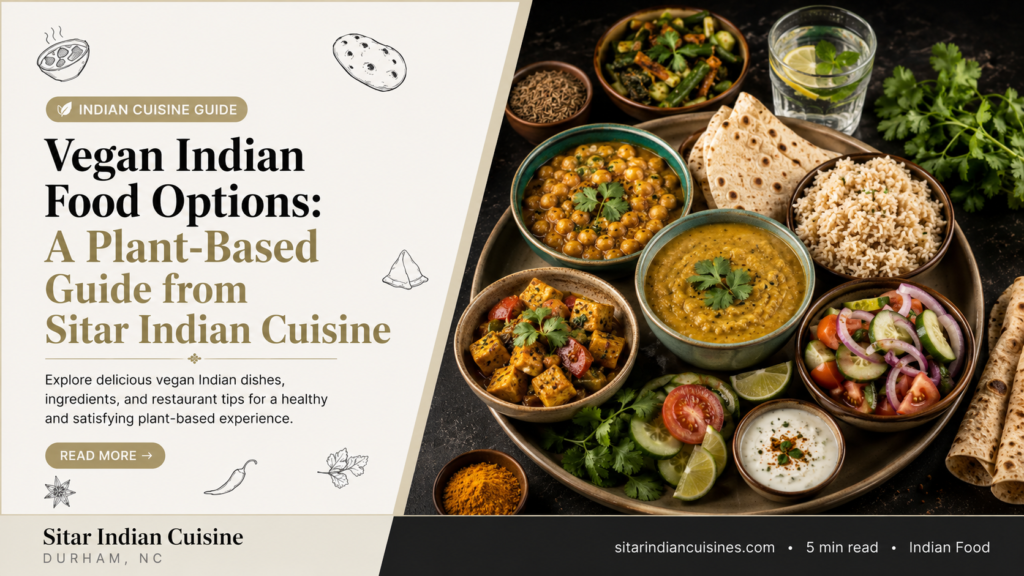
Indian food restaurants have a quiet superpower that surprises first-time diners: much of it was plant-based long before “vegan” became a menu word. Lentil dals, chickpea curries, and vegetable dishes are as central to the cuisine as meat and paneer. That makes it one of the most accommodating choices for anyone eating vegan, vegetarian, or simply trying to add more plants to the plate.
Here in Durham, finding those dishes is easier than most people expect. This guide walks through what to order, how to read an Indian menu with confidence, and where to find a full vegan spread without compromising on flavor.
Why Indian food is naturally vegan-friendly
Indian cooking is built on a foundation of legumes, grains, and vegetables. Chickpeas, lentils, beans, rice, and seasonal produce carry the meal, while spices and aromatics deliver the flavor. Coconut milk, tomato, and tamarind often do the work of dairy, so many dishes are vegan by default rather than by substitution.
That does not mean every dish is automatically vegan, though. Ghee (clarified butter), yogurt, and paneer appear in many recipes. The good news is that a knowledgeable kitchen can usually tell you exactly what is in each dish, and most vegetable curries and dals are easy to order without dairy. For clarity, vegan means avoiding all animal products including dairy, eggs, and honey, a definition laid out by The Vegan Society.
Classic Vegan Indian Dishes to Try
If you are new to plant-based Indian food, start with these reliable favorites:
- Channa masala: chickpeas simmered in a spiced tomato and onion gravy. Hearty, filling, and almost always dairy-free.
- Dal: slow-cooked lentils, from creamy yellow dal to smoky daal saag. A staple that is naturally vegan when made without ghee.
- Mixed vegetable curry: a rotating medley of seasonal vegetables in a rich, spiced sauce.
- Aloo beans and cabbage thoren: South Indian-style dry vegetable dishes seasoned with mustard seed and fresh coconut.
- Vegetable biryani: fragrant basmati rice layered with vegetables and whole spices.
- Roti or chapati: flatbreads that are typically vegan, unlike naan, which is usually made with yogurt and butter.
When in doubt, ask about the bread and the cooking fat. Those two details decide most dishes.
Curry, Masala, and How to Read the Menu
Part of eating well is understanding the words on the page. People often use “curry” and “masala” as if they mean the same thing, but they do not. Curry refers to the finished dish vegetables, lentils, or protein cooked in a sauce while masala is the blend of spices that flavors it. Knowing the Difference Between Curry and Masala makes ordering far less intimidating, especially for first-timers exploring Indian food.
For a vegan diner, this distinction is genuinely useful. A channa masala, for example, is chickpeas in a masala-based sauce. Understanding that the masala is a spice mixture not a dairy product removes a common worry about what is actually in the bowl.
A Full Vegan Spread at Sitar’s Buffet
Sitar Indian Cuisine has served Durham as an Indian food restaurant since 1998, and the buffet is where the plant-based range really shows. The menu’s “Harmony of Herbivores” section is built around seasonal vegetables transformed into colorful, green-forward dishes, while veg entrees like channa masala, mixed vegetables, aloo beans, daal saag, and cabbage thoren sit alongside the tandoori and seafood options.
Better still, Sitar hosts a dedicated vegan dinner buffet on every other Thursday, giving plant-based diners a full spread rather than a single adapted plate. The broader south Indian buffet also carries a strong lineup of naturally vegan dishes, from spiced lentil and vegetable preparations to rice and flatbreads.
Best Indian Vegan Dishes at Sitar
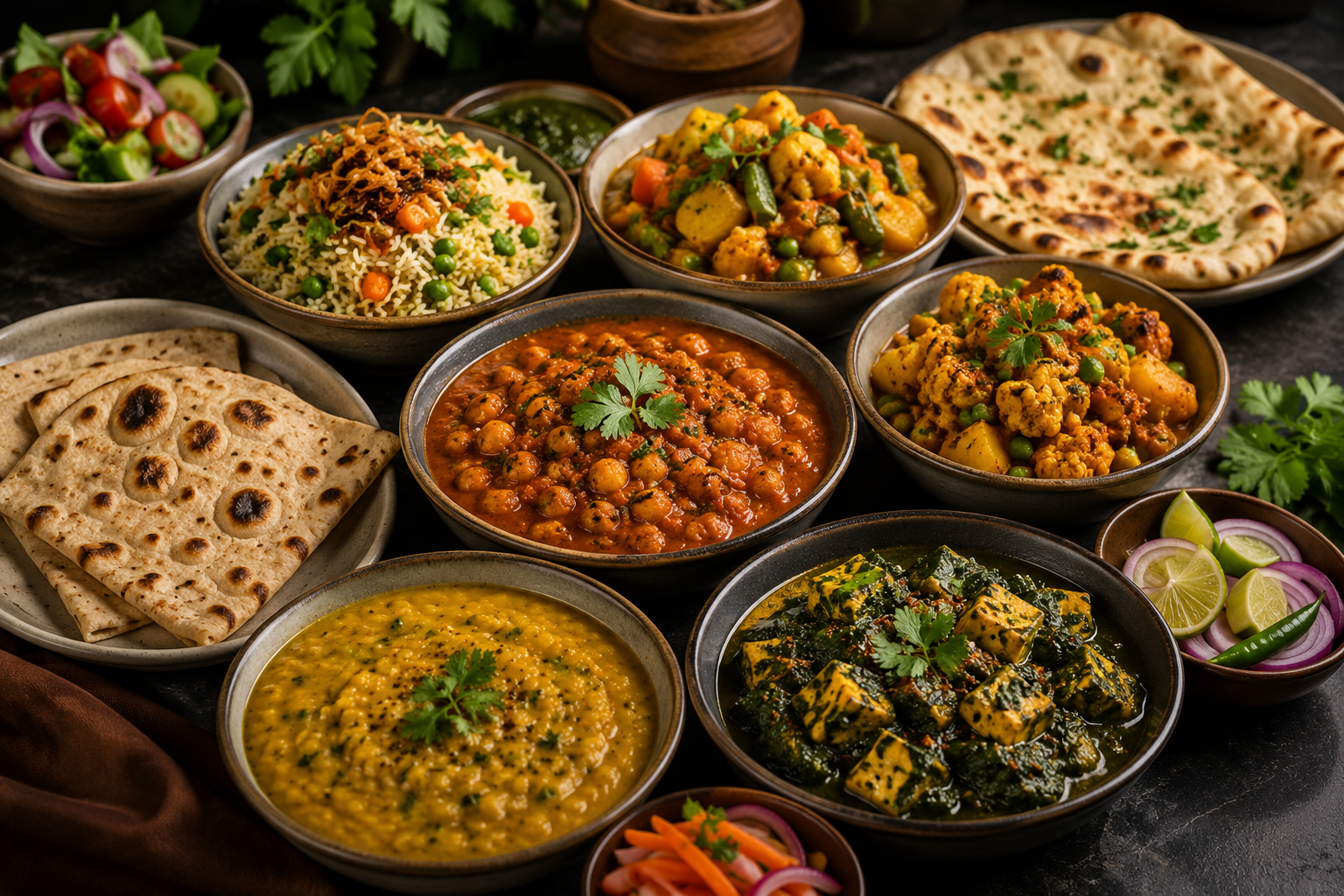
When you eat vegan at Sitar, these are the dishes to build a plate around. The buffet menu rotates by day, but the vegetable and lentil lineup is a constant:
- Channa Masala: chickpeas simmered in a spiced tomato and onion gravy. Hearty, filling, and dairy-free.
- Daal Saag: lentils slow-cooked with spinach, rich in plant protein.
- Mixed Vegetables: a rotating medley of seasonal vegetables in a spiced sauce.
- Aloo Beans: potatoes and green beans seasoned with mustard seed.
- Cabbage Thoren: a Kerala-style cabbage side finished with fresh coconut.
- Basmati Rice and Roti: the vegan-friendly bases that turn any plate of curries into a complete meal.
As with any Indian kitchen, the cooking fat is the one detail to confirm to ask for no ghee, and the vegetable and lentil dishes above are plant-based as written. That range is the real story: a vegan diner at Sitar can fill a full, varied plate without adapting a single recipe.
Is Indian food a healthy choice?
For many people, the appeal of Indian food goes beyond taste; it is also a genuinely healthy Indian food option. Legumes provide plant protein and fiber, vegetables bring vitamins and texture, and whole spices like turmeric, cumin, ginger, and coriander have been used for centuries in traditional cooking. Plant-based staples like lentils and chickpeas are well documented for exactly this reason Harvard’s Nutrition Source is a useful reference on how legumes and whole foods fit into a balanced diet.
That said, “healthy” still depends on choices. A vegan dal with roti and a side of vegetables is a balanced meal, while a dish finished with heavy cream or fried bread is richer. The good news is that plant-based eaters have plenty of lighter, vegetable-forward options to build a meal around a point worth keeping in mind whether you are managing a health goal or simply eating with intention.
The Takeaway
Eating vegan does not mean giving up flavor, and few cuisines prove that better than Indian food. From chickpea curries and slow-cooked dals to a dedicated vegan buffet night, Durham diners have more plant-based choices than they might expect. Next time you are deciding where to eat, consider how much of the menu already works for you then order with confidence.
Frequently Asked Questions
Is all Indian food vegetarian?
No. Indian food spans a wide range, from tandoori chicken and fish curries to purely plant-based dals and vegetable dishes. What it does offer is an unusually large vegetarian and vegan selection compared with many cuisines.
Is naan vegan?
Usually not. Traditional naan is made with yogurt and brushed with butter or ghee. If you are eating vegan, ask for roti or chapati instead, or confirm whether the restaurant offers a dairy-free version.
What is the difference between curry and masala?
Curry is the finished dish, a preparation cooked in a sauce or gravy. Masala is the spice mixture used to season it. For more depth, see our Difference Between Curry and Masala guide.
Does Sitar Indian Cuisine have a vegan buffet?
Yes. Sitar offers a dedicated vegan dinner buffet every other Thursday, alongside a daily buffet with a strong lineup of vegetable and lentil dishes.